
You Can Officially Track AI Visibility in Bing Webmaster Tools
You Can Officially Track AI Visibility in Bing Webmaster Tools
AI has already changed how today’s consumers research and ultimately decide the products and services they choose to buy. At an ever increasing pace, people are beginning their searches on an AI platform instead of traditional search engines. Even when they do make searches “the old fashioned way” platforms like Google and Bing are injecting AI responses above standard results.
Things are changing, fast. This transition into an AI first world could be the opportunity of a lifetime or the final nail in the coffin for your business. Which it is for you depends largely on what you do today.
The question every responsible business owner should be asking themselves is: How do AI platforms choose what businesses to recommend to users, and how can I get them to recommend mine?
Despite what some “GEO Experts” are saying, AI models are still largely dependent on traditional search results. Tools like Microsoft Copilot, Bing’s AI features, and conversational search tools from Google and OpenAI pull information from multiple websites and combine them into single, streamlined answers.
That means getting your website to show up in organic search results (SEO) is not only important, it is more important than it has ever been.
There’s just one problem. Let’s say you are aware of this and are actively investing in building up your website to rank better, how do you know whether that is translating to results in AI models?
Until recently, the only way to track how often AI platforms mentioned your business was through complex GA4 tracking setups or by paying for expensive AI Analytic Tools. Even then, the amount of information you could gather was limited and at times, inaccurate.
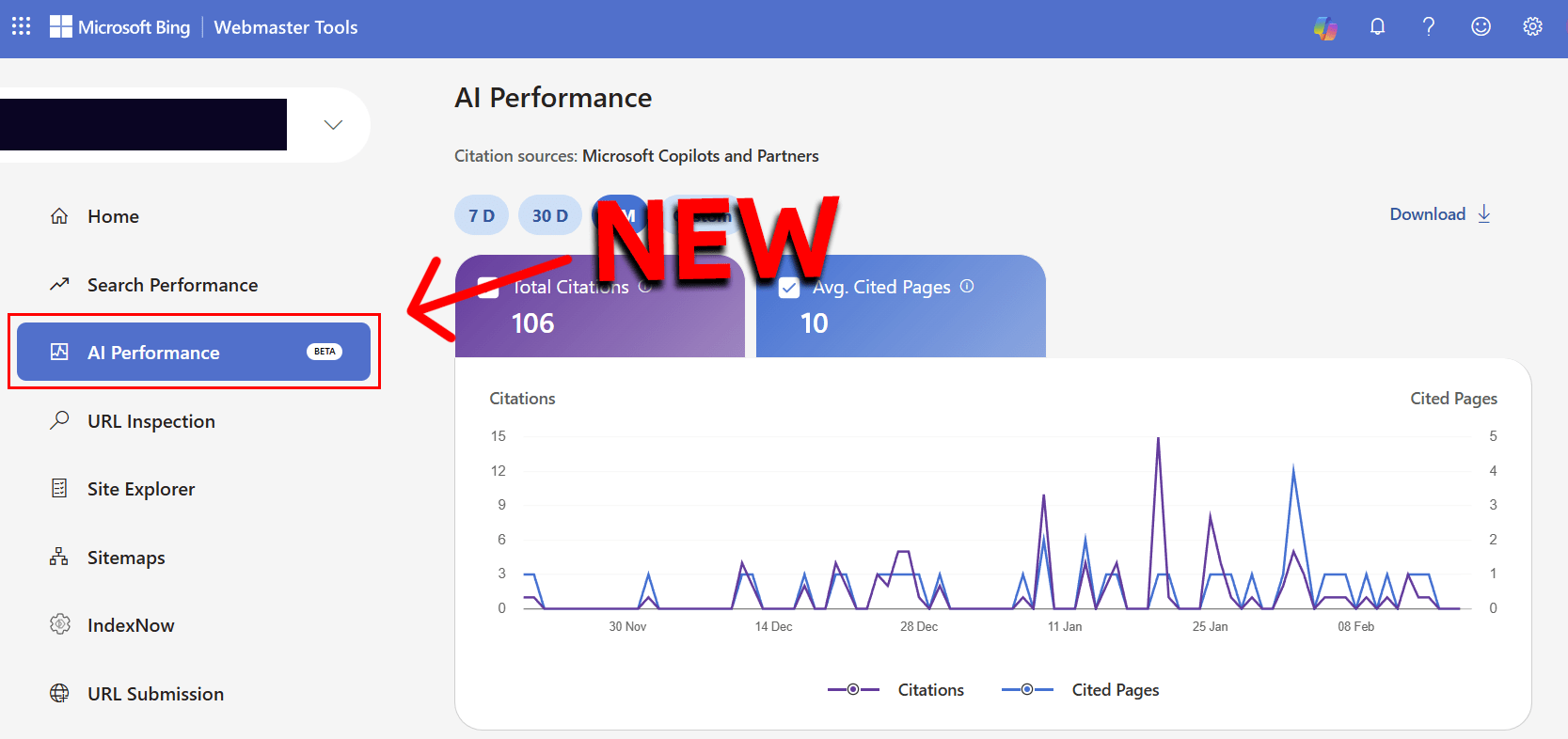
Bing just changed that with its new AI Performance report, which is free to any verified site owner through Bing Webmaster Tools. This report lets business owners see which of their web pages are referenced in AI-generated answers, how frequently they show up, and the types of questions that trigger these citations. As one of the first major search platform tools of its kind, it marks a significant shift in the way businesses approach online visibility.

Search has a new first impression
Previously, users clicked your site from search results and analytics tracked the visit. Now, AI-driven search provides answers by combining information from multiple websites, often without direct site visits or visible traffic. Your content influences users even if they never visit your page.
This shift matters for local businesses and B2B companies: if AI references your competitor’s content instead of yours, you’re left out of key conversations. Many businesses are unaware of their presence in these AI-powered searches.
What AI Performance report tracks
It’s worth noting that Google collects some AI overview data in Search Console; however, there is currently no dedicated view for AI citations and no page-level breakdown. Bing’s is the only comprehensive AI citation dashboard from a major search platform.
The report tracks four things:
Total Citations
How many times your site was referenced as a source during the selected period. In practice, it's your baseline. A rising number suggests your content is connecting with more queries. Flat or zero means something isn't landing.
Average Cited Pages
The average number of your pages that show up in AI-generated answers per day. If most citations come from one or two pages, consider whether you’re building depth across your site on related topics.
Grounding Queries
Before an AI generates an answer, it runs background searches to find and verify sources. The phrases it uses are called grounding queries, and Bing shows you a sample of this activity. These are the actual questions your pages are answering. They often don't match the keywords you've been optimizing for. That gap shows you where to focus next.
Page-level trends
Citation counts for specific URLs over time. You can see which pages are being cited consistently and which ones have dropped off. Pages that fade are often outdated or a competitor has published something more thorough on the same topic.
A new discipline is forming around this
Marketers are calling it Generative Engine Optimization, or GEO. The idea is to make your content clear and useful enough that AI tools reference it when answering questions. Unlike traditional SEO, which uses a hierarchical ranking system, GEO integrates multiple sources into AI responses and removes standard rankings. The goal is earning enough trust to be included.
As a result, GEO places higher value on content that delivers direct responses, is written clearly, and addresses the types of questions users are actually asking.
A few ways this plays out locally:
– A home-services company publishes a solid guide on what to look for when hiring a roofer. A homeowner nearby asks an AI assistant the same question. The guide gets cited and the company influences that customer's decision before they’ve visited a single website.
– A Charlotte restaurant has a well-written “date night” post. An AI building an evening itinerary for a couple pulls from it. The restaurant ends up in the recommendation without the user ever searching for it directly.
– A B2B firm’s FAQ clearly explains how to evaluate vendors in their category. Every time an AI answers that question, that firm’s content is part of the answer. That’s compounding reach that a click-based model can’t measure.
The AI Performance report lets you see where you’re being cited, what questions you’re answering, and whether that’s growing over time. You can also see where you’re absent, which is often exactly where a competitor is showing up instead.
4 things to do this month
You can get started without rebuilding your site or hiring an expert. Here’s where to begin.
1. Get your site verified in Bing Webmaster Tools. It's free and takes about 10 minutes if you're setting it up for the first time. Not sure if your site is already verified? Log in at webmaster.bing.com to check. Once confirmed, the AI Performance report becomes available.
2. Pull a 30- to 90-day window. Note your total citation count, the top pages being cited, and a few grounding queries that connect to your core services. That’s your baseline.
3. Pick one page to improve. Choose a services page, FAQ, or resource that appears in the report or should be there but isn't. Update headings to match how customers ask questions, add a clear answer near the top, and refresh outdated details.
4. Check it monthly. Ten minutes is enough to track whether citations are rising and new pages are getting picked up. Small, steady improvements add up.
AI search is already shaping what customers see and trust. The businesses paying attention now are building an advantage.
If you are looking for a bit more info on how to access Bing Webmaster Tools, we put together A free step-by-step guide that covers how to navigate the report and turn grounding queries into a content plan. Want expert help? Digital Marketing Charlotte works with local businesses to make sense of AI citation data and integrate it into SEO strategy. We're happy to walk you through what it means for your specific situation.
Images