
What Funeral Directors Really Talk About Between Sessions

What Funeral Directors Really Talk About Between Sessions
What Funeral Directors Really Talk About Between Sessions
by: Kevin Foushee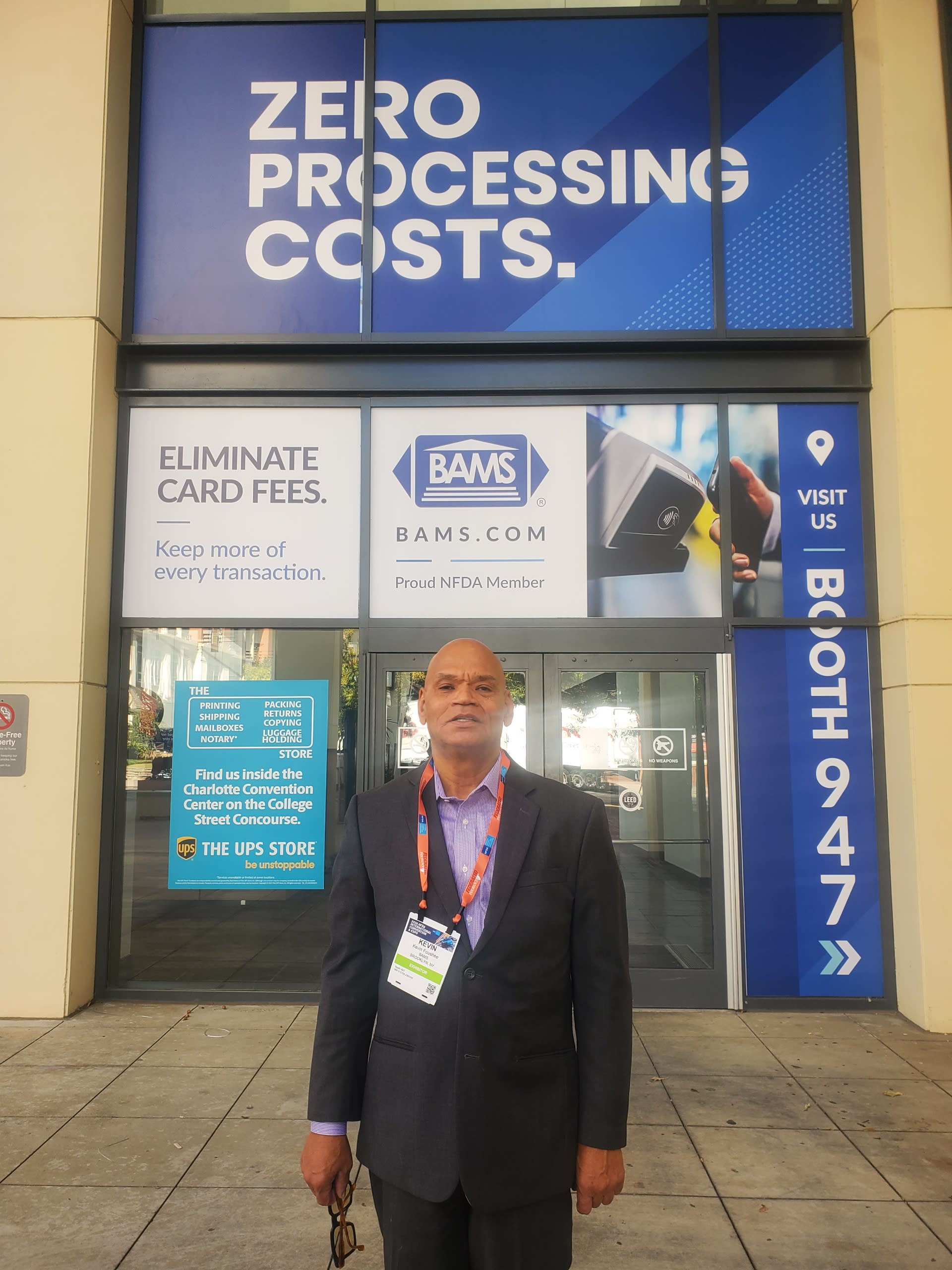
Oct 25-28th, 2026 — The National Funeral Directors Association held its International Convention & Expo here in Charlotte. I spent four days at the Convention Center with several thousand professionals moving between sessions, the exhibit hall, and the quieter conversations that often end up being more useful than the official program.
BAMS were there as Bronze Sponsor. For more than twenty years we’ve provided merchant services to restaurants, nonprofits, salons, and many other businesses, yet funeral homes have always occupied a distinct place in that work. Arrangement payments are larger, the timing is more compressed, and the process itself must never add to the burden families are already carrying.
The general sessions gave useful perspective. Shawn Kanungo spoke to the practical challenge of keeping a business steady amid constant external change. Dr. Magie Cook explored how gathering around shared purpose can strengthen leadership and trust in ways technology alone cannot. John Kenney closed the week by reflecting on the roughly 28,000 days most people are given and the clear-eyed lessons funeral directors witness every week. None of these ideas were new to the room, but they gave language to realities the profession already navigates daily.
What stayed with me most, though, were the conversations between sessions. Over the course of a single day Jeff and I spoke with operators across a wide spectrum within the industry. Some were local firms with deep roots in the Carolinas; others, like Nuria, had traveled from Spain. Regulations and cultural expectations differ, yet the same operational question surfaced again: how does a funeral home accept a substantial arrangement payment without creating an additional difficulty for the family?
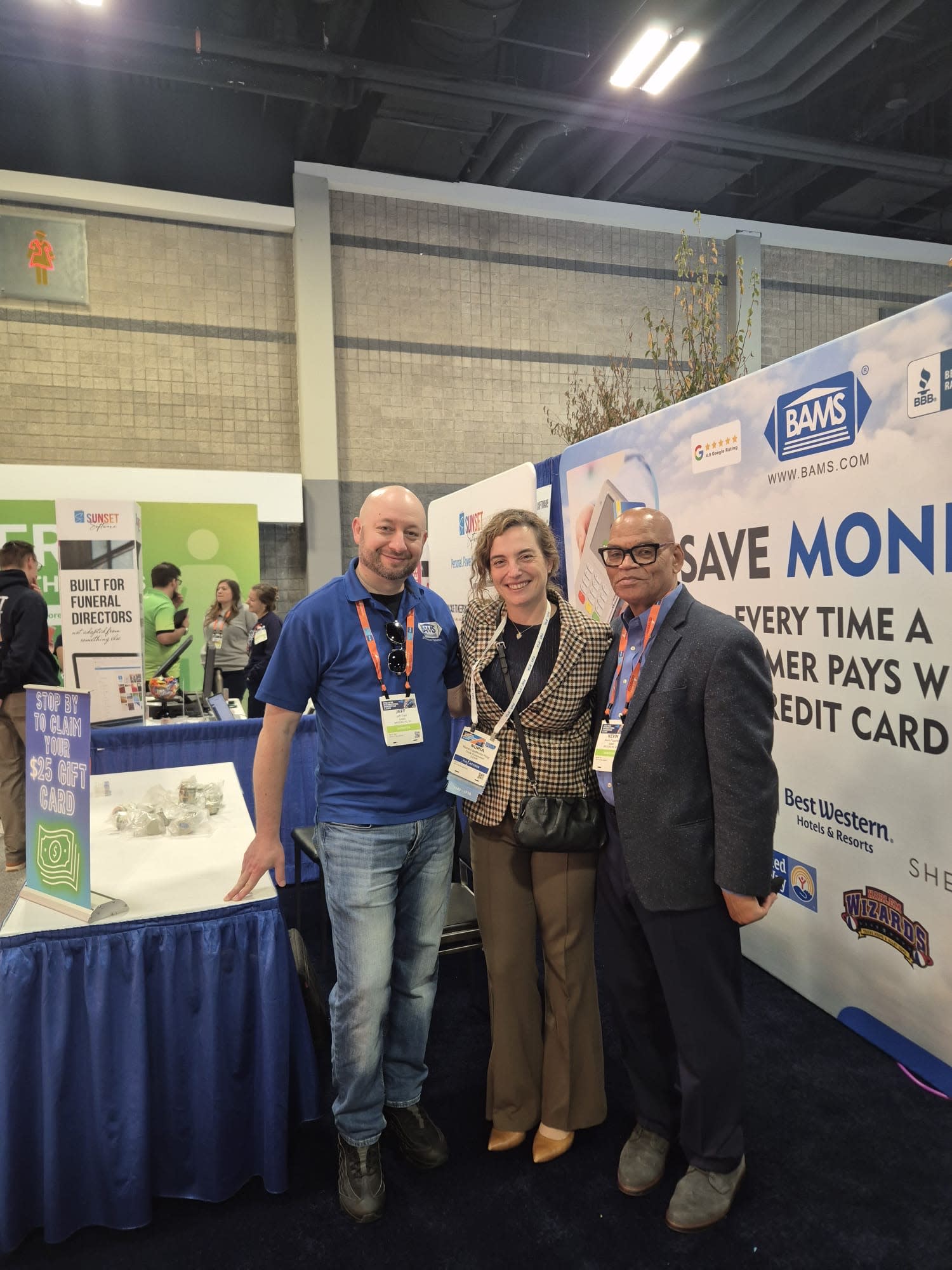 From left: Jeff Fuhr, Nuria Capdevila Roig, Kevin Foushee at the NFDA International Convention & Expo in Charlotte
For most funeral homes, effective funeral home payment processing comes down to a few essential requirements: an account designed to accommodate larger transactions without unnecessary holds or flags, next-day funding to maintain cash flow, secure phone payment options for families unable to attend arrangement conferences, clear reporting that simplifies reconciliation, and transparent pricing that eliminates unexpected fees from monthly statements.
Those exchanges rarely appear on the agenda, yet they reveal precisely what professionals are managing once they return to their firms. Being there in person made the nuances clear in a way no remote update or industry report can. We’ve focused on these details for years because many processors still treat funeral-service payments as ordinary retail transactions, an approach that creates friction the profession cannot afford.
Charlotte’s role as host brought a broad cross-section of the industry into one place for a few days. Our presence as a Bronze Sponsor was primarily an opportunity to listen: what remains cumbersome about how families pay, what is shifting, and where the points of friction are most acute. The same clear, direct approach that has served the restaurants and nonprofits we’ve worked with for two decades applies here as well. The distinction is simply that the consequences of poor process are higher and the tolerance for error is lower.
If these considerations reflect what you’re seeing in your own firm, whether a funeral home or another local business whose current processing feels unnecessarily complicated, I welcome the conversation. You can review options at BAMS or contact me to walk you through your current situation and discuss what would better fit the way you operate.
The most valuable part of a week like this comes later, when the conversations that started in Charlotte turn into practical changes back at your desk.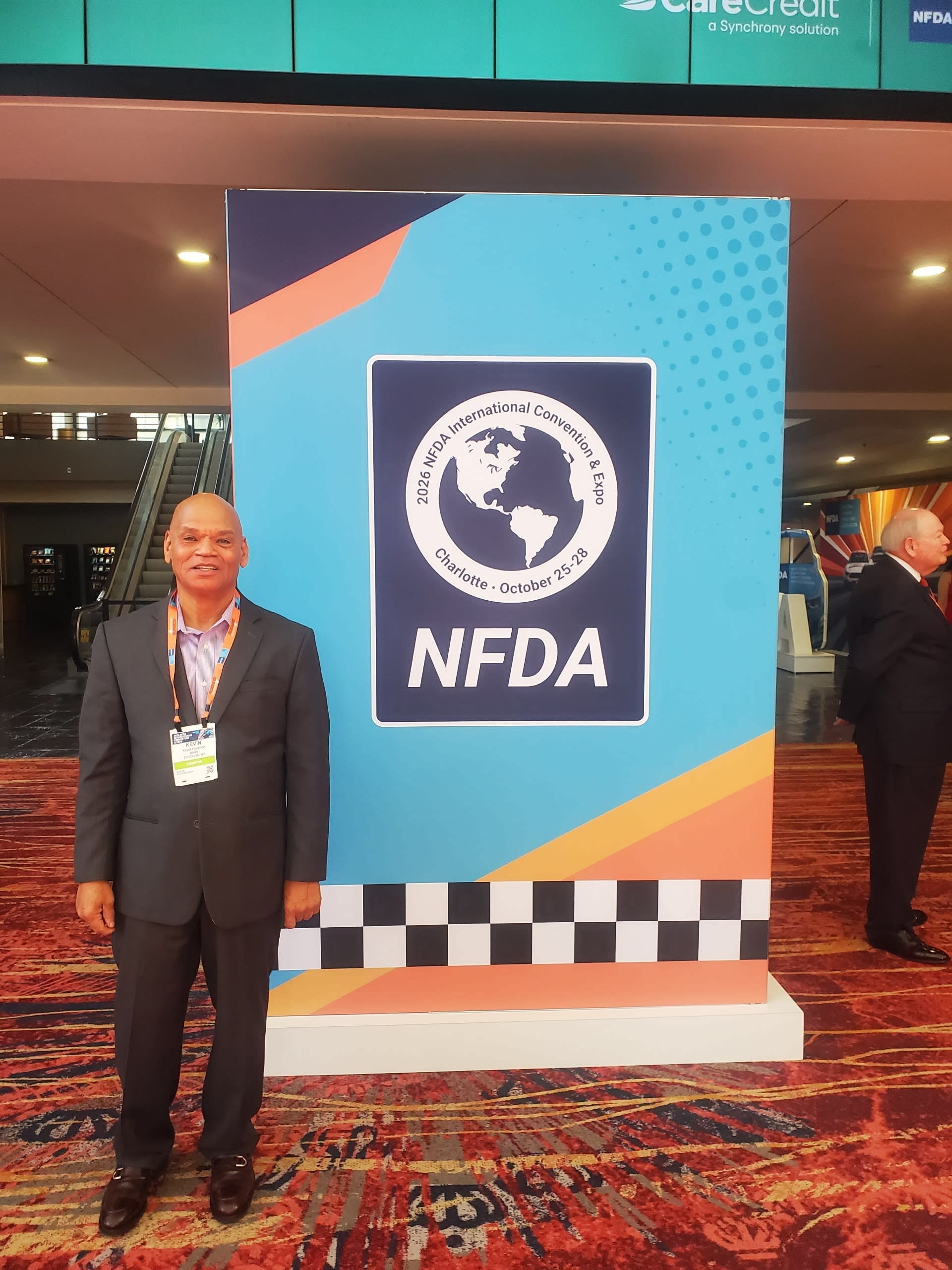
Images

