Snow and Ice on Your Roof: Hidden Winter Damage
Snow and Ice on Your Roof: Hidden Winter Damage
While Charlotte isn’t known for long winters, the recent snow and ice storms across the region have reminded homeowners that even short-term winter weather can take a serious toll on roofing systems. Snow accumulation, freezing temperatures, and ice buildup can either cause new damage or expose existing weaknesses that may have gone unnoticed during warmer months.
At Storm Guard Roofing of Charlotte, we often see winter-related roof issues appear days, weeks or even months after the storm has passed—usually when leaks, stains, or gutter failures suddenly show up. Understanding where snow and ice can cause damage is the first step toward protecting your home.
How Snow and Ice Stress a Roofing System
Even a few inches of snow can add significant weight to a roof, especially when temperatures fluctuate and snow melts and refreezes. Ice buildup prevents proper drainage and forces water into areas not designed to handle prolonged moisture exposure. Melting snow exposes weaknesses or trouble spots in your shingles, flashings, or boots.
Key areas that are most vulnerable include:
Shingles and Roofing Materials
Snow and ice can loosen shingles, crack brittle materials, or dislodge protective granules. When ice melts during the day and refreezes overnight, that expansion and contraction accelerates wear and can shorten the roof’s lifespan.
Gutters and Downspouts
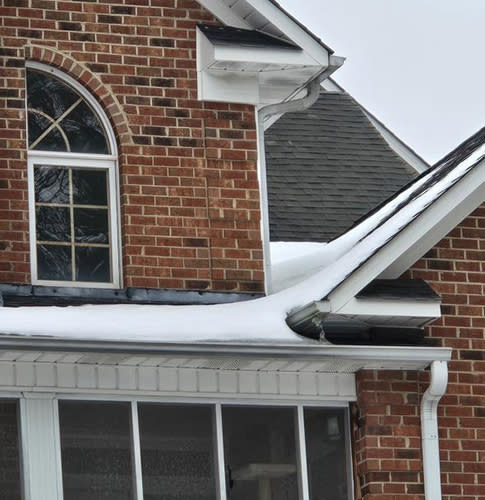
Ice accumulation inside gutters adds weight that can pull them away from the fascia or cause sagging. Blocked gutters also prevent proper drainage, allowing water to back up under the roof edge and potentially into the home. Ice dams may also physically damage gutters and downspouts.
Flashings
Flashings around chimneys, walls, skylights, and roof transitions are critical for waterproofing. Ice buildup can separate flashing from the roof surface, break seals, or expose fasteners—creating easy entry points for water once temperatures rise.
Drip Edge
Drip edge is designed to guide water away from the roof edge and into the gutters. Ice can bend, loosen, or lift drip edge materials, allowing water to travel behind the gutter system and damage fascia boards and decking.
Pipe Boots and Roof Penetrations
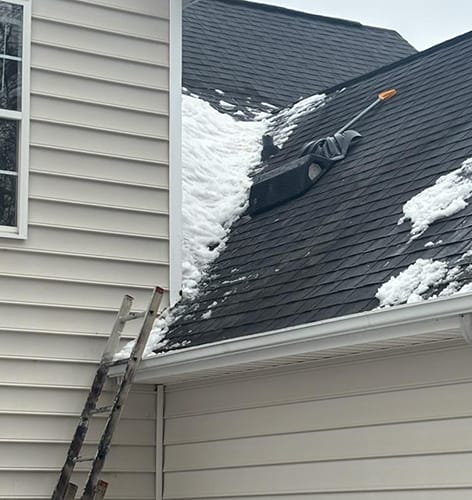
Rubber pipe boots and vent seals are especially susceptible to cold temperatures. Freezing conditions can cause cracking or splitting, which may not be obvious until rain returns and leaks develop around plumbing vents or exhaust pipes.
Why Winter Storms Often Expose Existing Damage
In many cases, snow and ice don’t create brand-new problems—they reveal ones that were already there. Small cracks, aging seals, or improperly installed components may hold up during normal rainstorms but fail under prolonged ice exposure or freeze-thaw cycles.
That’s why post-storm inspections are so important, even if there’s no visible interior damage yet.
What Homeowners Should Do After a Snow or Ice Event
Look for sagging gutters, loose shingles, or visible ice damage once conditions are safe.
Check ceilings and attic spaces for stains or damp insulation.
Address minor issues early before they turn into larger, more expensive repairs.
A professional roof inspection can identify hidden damage and help determine whether repairs are needed now—or if monitoring is sufficient.
Local Experience Matters
Winter weather in the Carolinas presents unique challenges because roofs aren’t exposed to prolonged freezing every year. Working with a local roofing contractor who understands these conditions can make all the difference in preventing long-term issues.
Storm Guard Roofing of Charlotte is proud to serve homeowners throughout the greater Charlotte area, helping protect homes through every season—even the unexpected ones.
Images