
How AI Is Reshaping the Phishing Threat Landscape — and What Businesses Should Do Now
How AI Is Reshaping the Phishing Threat Landscape — and What Businesses Should Do Now
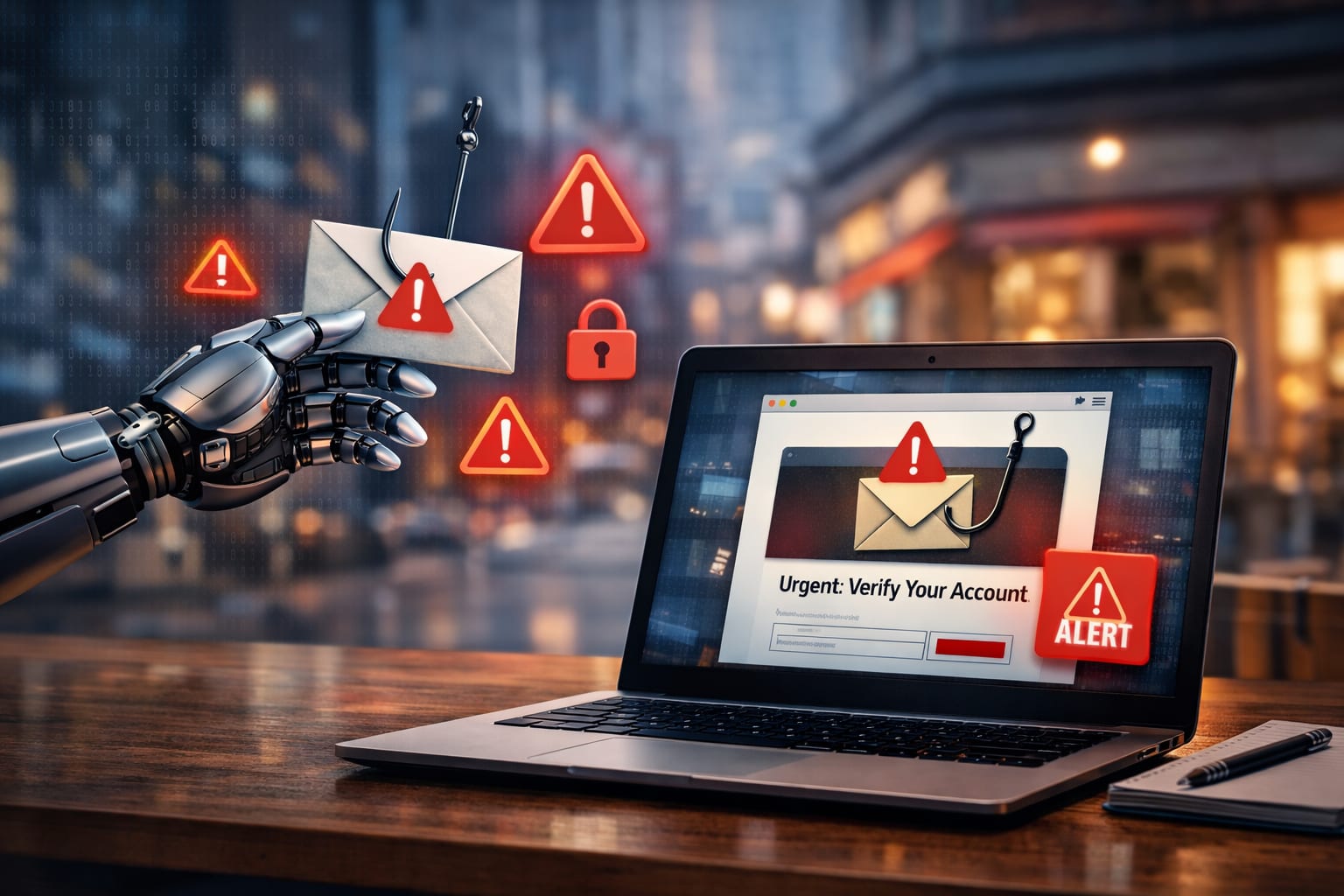
Phishing has long been one of the most common cyber threats facing businesses, but artificial intelligence (AI) is rapidly changing how these attacks are created and delivered. What were once easy-to-spot scam emails have evolved into highly convincing, targeted messages that are increasingly difficult to detect.
For small and medium-sized businesses, this shift presents a growing risk. Phishing is no longer just an IT concern — it is often the entry point for broader attacks that can lead to financial loss, data exposure, operational disruption, and reputational damage.
Why AI Makes Phishing More Dangerous
Historically, phishing attempts relied on obvious warning signs such as poor grammar or generic messaging. AI has largely eliminated those weaknesses.
Today, attackers can use AI to:
- Generate professional, well-written messages tailored to specific industries or job roles
- Personalize emails using publicly available business and employee information
- Rapidly test and refine phishing campaigns to increase success rates
- Impersonate trusted vendors, partners, or internal team members with alarming accuracy
These AI-driven attacks blend seamlessly into normal business communications, making it much harder for employees to distinguish between legitimate requests and malicious ones.
Why SMBs Are at Risk
Small and medium-sized businesses are often attractive targets because they may lack dedicated security teams or enterprise-level protections. A single successful phishing email can compromise credentials, expose sensitive data, or enable fraudulent transactions.
The impact can be significant:
- Financial losses from fraud or ransomware
- Exposure of customer or employee data
- Disrupted operations and downtime
- Long-term damage to customer trust
As AI lowers the barrier to launching sophisticated phishing campaigns, even less-experienced attackers can execute highly effective attacks at scale.
What Businesses Should Do Now
As phishing tactics evolve, defensive strategies must evolve as well. Businesses should assume phishing attempts will look legitimate and plan accordingly.
1. Train Employees for Today’s Threats
Security awareness training should focus on real-world scenarios, teaching employees to verify unexpected requests involving payments, credentials, or sensitive information — even when messages appear professional and familiar.
2. Strengthen Account Security
Multi-factor authentication (MFA) should be enabled wherever possible, especially for email, remote access, and financial systems. MFA can significantly reduce the impact of stolen credentials.
3. Use Modern Email and Threat Protection
Advanced security tools that use behavioral analysis and AI can help detect suspicious activity that traditional filters may miss, adding another layer of protection.
4. Have a Response Plan
No defense is perfect. Businesses should establish and regularly review incident response procedures so they can act quickly when phishing attacks succeed. Early detection and response can limit damage and recovery time.
Building Resilience in an AI-Driven Threat Landscape
AI has raised the sophistication of phishing attacks, but awareness and preparation can significantly reduce risk. By combining employee education, stronger identity protections, and modern security tools, businesses can build resilience against one of today’s most persistent threats.
If your organization needs guidance on strengthening its cybersecurity posture or adapting to an evolving threat environment, CHR Solutions works with businesses to help protect systems, data, and operations. Contact Chandler Johnson through our chamber directory or visit: chrsolutions.com/cybersecurity/ for more information.
Images